Roof Lining Repair Warranty & Coverage (2026)
A sagging headliner (roof lining) can make an otherwise clean interior feel tired overnight. It?s also one of those issues that owners often put off because it seems cosmetic?until the fabric starts brushing your head, blocking rear visibility, or dropping foam dust onto your seats. At that point, most people ask the same question: ?Is this covered under warranty, or am I paying out of pocket??
The answer depends on the cause, the type of warranty you have, the age/mileage of the vehicle, and?most overlooked?whether the dealer can classify the failure as a defect versus wear-and-tear or owner-related damage. This guide breaks down what roof lining/headliner coverage typically looks like, what to say at the service counter, and how to protect yourself if you choose an aftermarket repair.
You?ll also learn how to document the problem, compare repair options, avoid common claim-killing mistakes, and keep your interior looking right long after the repair.
What Counts as ?Roof Lining? (and Why It Fails)
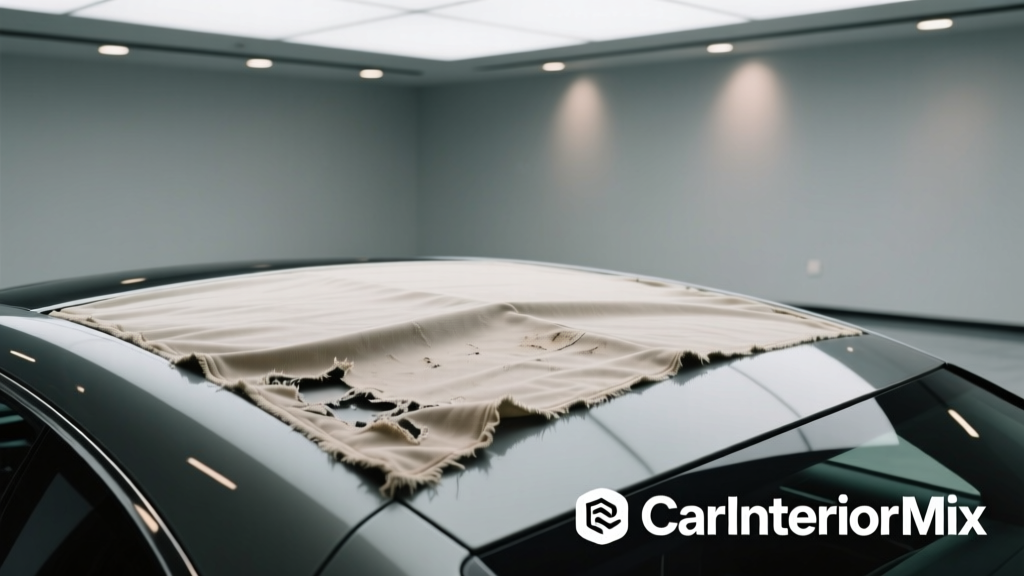
Most cars use a headliner assembly: fabric bonded to a molded backing board with a thin foam layer in between. Over time, the foam breaks down and the adhesive loses grip, leading to sagging, bubbling, or full detachment.
Common roof lining/headliner failure modes
- Sagging fabric near the rear window, dome light, or visor area (classic foam degradation).
- Bubbling or rippling where heat has weakened adhesive.
- Stains from sunroof drains, antenna seals, windshield leaks, or condensation.
- Detached trim edges around A/B/C-pillars after airbag deployment, windshield replacement, or prior interior work.
- Physical damage from cargo, pets, or improper cleaning.
Why this matters for warranty
Warranties generally cover defects in materials or workmanship?not aging foam, heat-related breakdown, contamination, or misuse. So the ?why? behind the sag or stain is the difference between a covered repair and a denied claim.
Understanding Warranty Types That May Apply
Roof lining repair coverage varies widely. Here are the warranty categories that most often come into play.
1) Factory bumper-to-bumper (basic) warranty
This is the most relevant warranty for interior components, usually lasting 3 years/36,000 miles (varies by brand). If the headliner material delaminates early due to defective adhesive, weak foam, or assembly issues, this is where coverage may apply.
Typically covered:
- Premature detachment or delamination deemed a manufacturing defect
- Loose headliner due to incorrect factory installation
- Trim clips or fasteners that fail due to defect
Typically not covered:
- Wear-and-tear with age (especially outside the basic warranty window)
- Heat/sun damage in high-temperature regions if classified as ?environmental?
- Stains from leaks caused by external damage or neglected maintenance
2) Certified Pre-Owned (CPO) warranty
CPO coverage differs by manufacturer and plan. Some CPO ?limited? warranties mirror basic coverage; others focus on powertrain. Interior trim items may be excluded or limited.
Tip: Look for exclusions like ?upholstery,? ?trim,? ?fabric,? ?headliner,? and ?water leaks.? If water leaks are excluded, stained headliners are often denied unless you can prove a covered part failed.
3) Extended warranty / vehicle service contract (VSC)
Aftermarket and dealer-sold service contracts often exclude cosmetic or trim items. Even ?exclusionary? plans may deny coverage by classifying the headliner as fabric/trim rather than a functional component.
What can still be covered under some plans:
- Sunroof motor or mechanism failures (not the stained headliner itself)
- Dome light or wiring repairs that require headliner removal
- Factory audio/microphone components integrated into the headliner (rare)
4) Corrosion/perforation warranty
This almost never applies to headliners directly. However, if a body leak is caused by a covered corrosion defect and the manufacturer accepts it, the headliner damage may be considered ?consequential.? This is uncommon, but it?s worth asking if rust-related water intrusion is involved.
5) Insurance (comprehensive coverage)
If the roof lining damage is tied to a covered event, insurance may be the best route.
Examples where comprehensive may apply:
- Tree branch impact that damages roof structure and headliner
- Hail damage requiring roof repair and headliner removal
- Rodents chewing wiring/insulation leading to headliner damage
- Vandalism (cuts, stains, deliberate damage)
Watch the deductible: If your deductible is $500?$1,000 and a headliner recover is $350?$900, paying out of pocket can be more sensible.
What Dealers and Warranty Inspectors Look For
When a service advisor writes up a headliner complaint, the outcome often hinges on how the root cause is categorized.
Factors that increase your chance of coverage
- Low age/mileage with clear early failure (e.g., sagging at 18 months)
- No signs of contamination (no smoke residue, oily film, or harsh cleaner marks)
- Failure in a typical defect area like uniform delamination near edges or console
- Service history showing normal maintenance and no prior interior modifications
Factors that often lead to denial
- Water staining without an approved covered leak repair
- Evidence of prior work (staples, glue streaks, mismatched trim clips)
- Aftermarket installations like roof-mounted accessories, dashcams hardwired through headliner, ambient lighting strips
- Strong odors or residue (cigarette smoke can be cited as contamination)
- Age-related foam breakdown on older vehicles (common after 7?10 years)
Step-by-Step: How to File a Roof Lining Warranty Claim
A clean claim is a documented claim. Use this process to avoid getting brushed off with ?that?s wear-and-tear.?
Step 1: Document the issue clearly
- Take photos in good light (wide shot plus close-ups). Include the area around dome lights, grab handles, visors, and pillars.
- Record a short video if it?s actively sagging or flapping while driving.
- Note the conditions: temperature, whether the vehicle was parked outside, and when you first noticed it.
Step 2: Check your warranty booklet and exclusions
- Search terms: ?headliner,? ?roof lining,? ?trim,? ?upholstery,? ?interior,? ?water leaks,? ?adjustments.?
- Confirm in-service date and remaining mileage/time.
Step 3: Write a simple description for the service advisor
Use objective language. Example:
- ?Headliner fabric is separating from backing near rear dome light. No cleaners used. No accessories installed. Started at 22,000 miles.?
Step 4: Ask for diagnosis, not just a quote
Request that the dealer inspect for defective bonding and verify no leak sources. If there?s staining, ask for a documented leak test.
Step 5: Escalate politely if denied
- Ask for the denial reason in writing on the repair order.
- Request photos from the technician if they claim contamination or prior repair.
- If you disagree, contact the manufacturer customer assistance line and open a case.
Step 6: Decide on next steps
- If covered: confirm whether they will replace the headliner assembly or attempt a spot repair (replacement is usually better).
- If not covered: compare upholstery shop recover vs. replacement board vs. DIY.
Coverage Scenarios: Real-World Examples
- Covered (common): A 2-year-old car with uniform delamination around the overhead console, no stains, no modifications. Dealer diagnoses adhesive failure and replaces headliner under basic warranty.
- Denied (common): An 8-year-old vehicle with sagging across the entire roof. Classified as foam deterioration/wear-and-tear.
- Denied but fixable: Water stain around the sunroof opening. Dealer finds clogged drains due to debris buildup. They may treat it as maintenance and deny headliner replacement, even if they clear the drains.
- Insurance angle: After hail damage repair, the headliner creases and clips break during removal. Body shop coverage or insurance supplement may pay for replacement if documented properly.
Repair Options and Cost Comparison (When Warranty Doesn?t Help)
If you?re out of warranty or denied coverage, the right repair depends on budget, how long you plan to keep the car, and how ?factory? you want the finish.
Option A: Professional headliner recover (best value for most)
An upholstery shop removes the headliner board, strips old fabric/foam, and bonds new headliner material.
- Typical cost: $350?$900 (more for large SUVs, complex sunroofs, premium vehicles)
- Pros: Looks close to OEM, long-lasting if done right, color/material choices
- Cons: Vehicle down time (often 1 day), quality varies by shop
Option B: Replace headliner assembly (OEM or used)
- Typical cost: $800?$2,500+ installed depending on model and availability
- Pros: True OEM look, no fabric-matching issues
- Cons: Expensive, shipping damage risk, used units may sag later
Option C: DIY re-glue (temporary unless done thoroughly)
DIY can work for small edge separations, but ?spray and pray? repairs often fail in weeks when heat returns.
- Typical cost: $20?$80
- Pros: Cheapest, quick
- Cons: High failure rate, overspray mess, wrinkles, can reduce resale appeal
Product Recommendations: Adhesives and Materials That Actually Work
If you?re doing a DIY repair or evaluating a shop, focus on high-temperature headliner adhesive. Standard craft glue often softens in summer heat.
Adhesive comparison (popular, proven choices)
- 3M Headliner & Fabric Adhesive: Widely used for small repairs and full recovers; good heat resistance when applied correctly.
- 3M Hi-Strength 90: Strong bond and good for some applications; must be used carefully to avoid bleed-through and stiff spots.
- Permatex Headliner Adhesive: Common DIY option; works best on clean, properly prepped surfaces.
Material tips
- Use automotive headliner fabric with foam backing (typically 1/8? or 1/4?).
- Match foam thickness to OEM when possible to avoid fit issues around pillars and visors.
- If your car has side-curtain airbags, avoid adding thick layers that can interfere with trim fitment.
Common Mistakes That Void Coverage or Ruin the Repair
- Trying a DIY glue fix before a warranty visit: Visible adhesive, staples, or pin marks can lead to an instant denial.
- Ignoring a leak: Fixing the headliner without addressing sunroof drains or windshield seals means the stain (and sag) returns.
- Using the wrong cleaner: Harsh solvents can dissolve foam and leave permanent dark patches.
- Skipping surface prep in DIY: Spraying adhesive onto crumbling foam guarantees failure. Old foam must be removed.
- Overheating the adhesive: Parking in extreme heat right after repair can soften glue before it cures.
- Choosing the cheapest shop: Poor-quality fabric and low-temp adhesive often sag again within a year.
Practical Tips to Extend Roof Lining Life
- Reduce heat load: Use a windshield sunshade and crack windows slightly when safe/legal to lower cabin temps.
- Keep sunroof drains clear: If you have a sunroof, have drains inspected periodically?especially if parked under trees.
- Clean gently: Use a lightly damp microfiber and interior-safe cleaner; avoid soaking the headliner.
- Address odors carefully: Heavy steam or saturated odor treatments can loosen adhesive. Choose low-moisture methods.
FAQ: Roof Lining Repair Warranty and Coverage
Is a sagging headliner covered under factory warranty?
Sometimes. If the vehicle is within the basic (bumper-to-bumper) warranty period and the dealer classifies it as a defect in materials/workmanship, it may be covered. If it?s deemed wear-and-tear, heat-related aging, contamination, or owner damage, it?s commonly denied.
My headliner is stained from a leak?will warranty cover it?
Warranty may cover the cause if a covered component failed (for example, a defective sunroof frame seal on a newer car), but stains are often treated as consequential damage and evaluated case-by-case. Get a documented leak test and ask the dealer to identify the failed part.
Will an extended warranty (service contract) pay for headliner repair?
Many service contracts exclude upholstery and trim, which can include headliners. Some higher-tier ?exclusionary? plans still deny headliner claims unless a covered mechanical/electrical failure caused the damage. Always read the exclusions section.
Is it better to replace the headliner board or re-cover it?
For most owners, professional re-covering is the best balance of cost and quality. OEM replacement can be ideal but is often much more expensive. Used headliners can save money but may fail again if the foam is already aging.
Can I use spray adhesive without removing the headliner?
For small edge separations, sometimes. For widespread sagging, no?because the foam layer has usually turned to dust, and new glue won?t bond properly. A lasting fix requires removing the board and stripping old foam.
Does a headliner repair affect resale value?
A clean, professional repair can improve resale, especially if the sag was obvious. A messy DIY job (wrinkles, glue stains, tacks) can hurt value and raise questions about prior leaks or neglect.
Next Steps: Get the Best Outcome (Covered or Not)
If your roof lining is failing, start with documentation and a warranty check before touching anything. Book a dealer inspection if you?re still within the basic warranty or CPO coverage, and ask for the cause to be written clearly on the repair order. If you?re out of coverage, get quotes from a reputable upholstery shop and compare that against OEM replacement cost?then fix any leaks first so you?re not paying twice.
For more no-nonsense interior guides?headliners, trim, upholstery care, and cabin upgrades?browse the latest articles on carinteriormix.com.